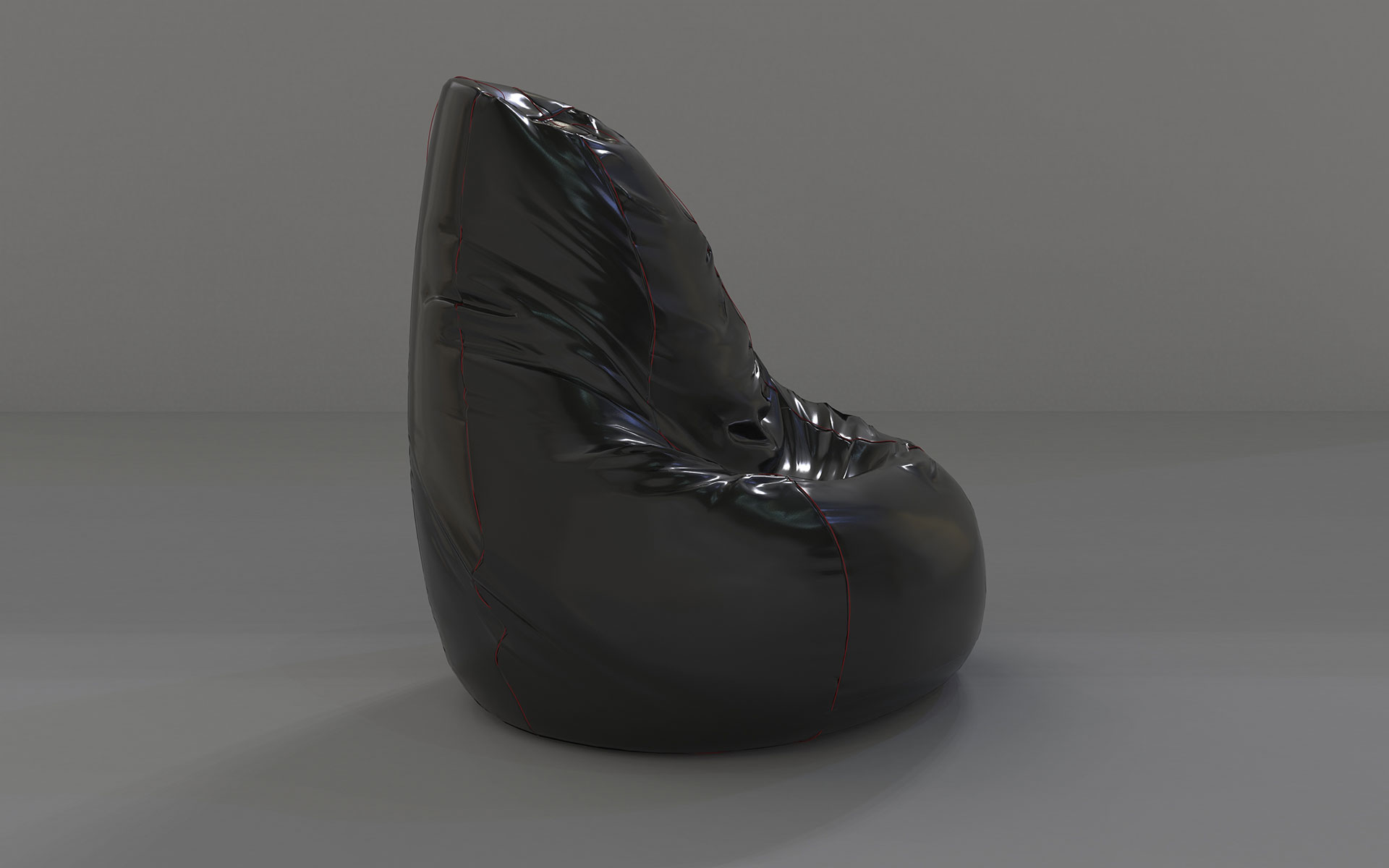
SAKKI is the pouf that challenges fashion: a provocative symbol that invites you to sit on what the textile industry prefers to hide. Made from garbage bags, it represents the fashion crisis, the low-quality fabrics produced at low cost and the degrading working conditions. A world buried inside black bags, where exploited hands and miserable wages weave the plot of a fashion that has no future. Sit down, but think carefully.
The crisis in the fashion sector in Italy is the reflection of an industrial system that, although it once boasted a prestigious “made in Italy”, is today marked by the degradation of the workforce and increasingly insufficient wages. The textile and clothing sector saw a decline of 18.3%, with numerous difficulties also linked to the lack of qualified workers, such as seamstresses and leather workers, whose number is continuously decreasing.
But the crisis also affects developing countries, where forced labor, such as that of the Uighurs in China, is the basis of the production of cotton and PVC, essential for the garments that also arrive in Europe. These workers, victims of a system of state repression, are forced to produce for brands including luxury ones, driving up the price of the products without reflecting the real conditions of those who produce them.
Fast fashion, with its constant low-cost innovation, has led to a spiral of unsustainable consumption. The fast fashion industry exploits low-quality materials, using large amounts of natural resources, without thinking about environmental damage. This system promotes immediate consumption and continuous disposal, creating mountains of textile waste, but luxury brands are not immune to these problems. Despite the aura of exclusivity and quality, even the most prestigious brands contribute to global pollution by using harmful chemicals and damaging practices such as deforestation for leather and silk production.
This double-face is further exacerbated by cases of labor exploitation that have highlighted how far Italian fashion is from its reputation for “ethical excellence.” Low wages and inhumane treatment of workers are not an anomaly, but an integral part of a system that rewards efficiency and profit at the expense of people. The future of fashion must be responsible, ethical and sustainable, and not just a game of appearances.